12019-03-02T19:56:59+00:00Paul A. Harris0462def817acd13db43634107b67e5f0f737f3f121plain2019-03-02T19:56:59+00:002017072519404420170725194044Paul A. Harris0462def817acd13db43634107b67e5f0f737f3f1
Petric poetics expresses a life composed in stone. A petric poetics sutures a seam along an asymptotic rapprochement between writing and rocks: stones becoming signs and language becoming lithic.
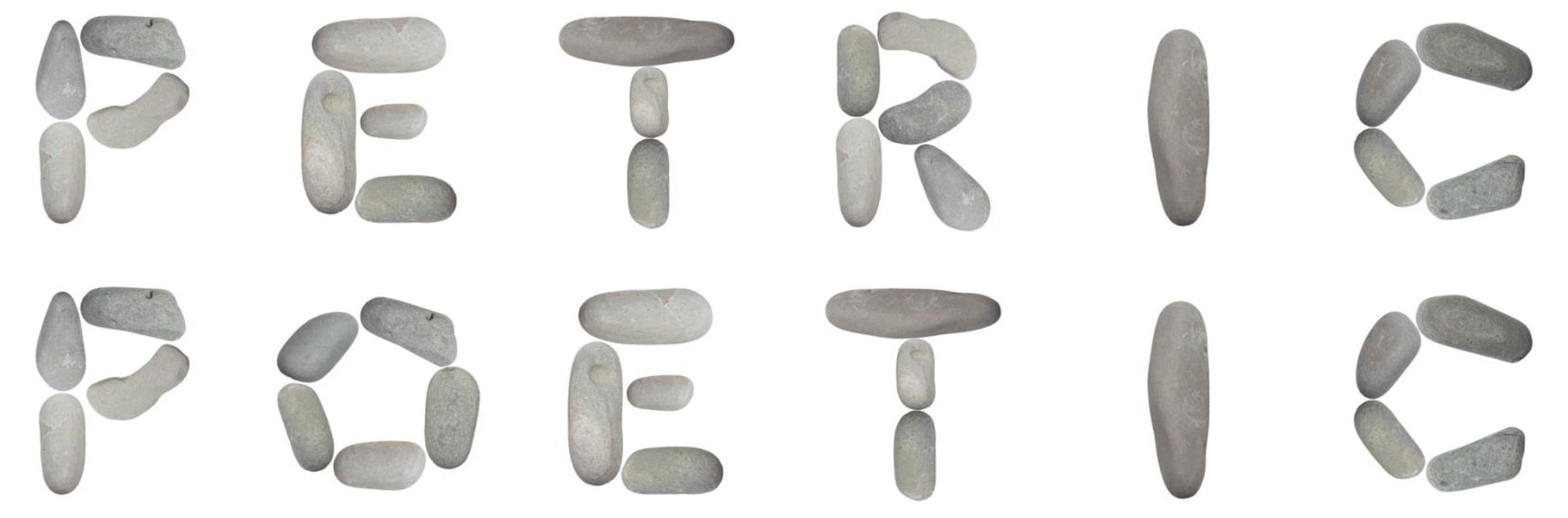
The verbicovisual proximates PETRIC POETIC serve as apposite indexical lexicals pointing to a terrain where words (=) matter. Petric poetics is composed in a confluence of earthworks and assemblage, concrete poetry, land art and collage. All signs being equal, all matter is signs, all signs matter.
Petric Poetic In-Principles:
Stone is a signifying medium
Words emerged from the earth.
Language can merge with stone.
The visual is tactile: eyes touch; hands see.
Absorption: absorb stone-language by becoming absorbed by the language of stones.
Conformity: a lithic literacy seeks "a kind of word magic, the power that certain terms possess to enchant our relations with nature and place" (Robert Macfarlane).
Unconformity: “words and rocks contain a language that follows a syntax of splits and ruptures” (Robert Smithson).
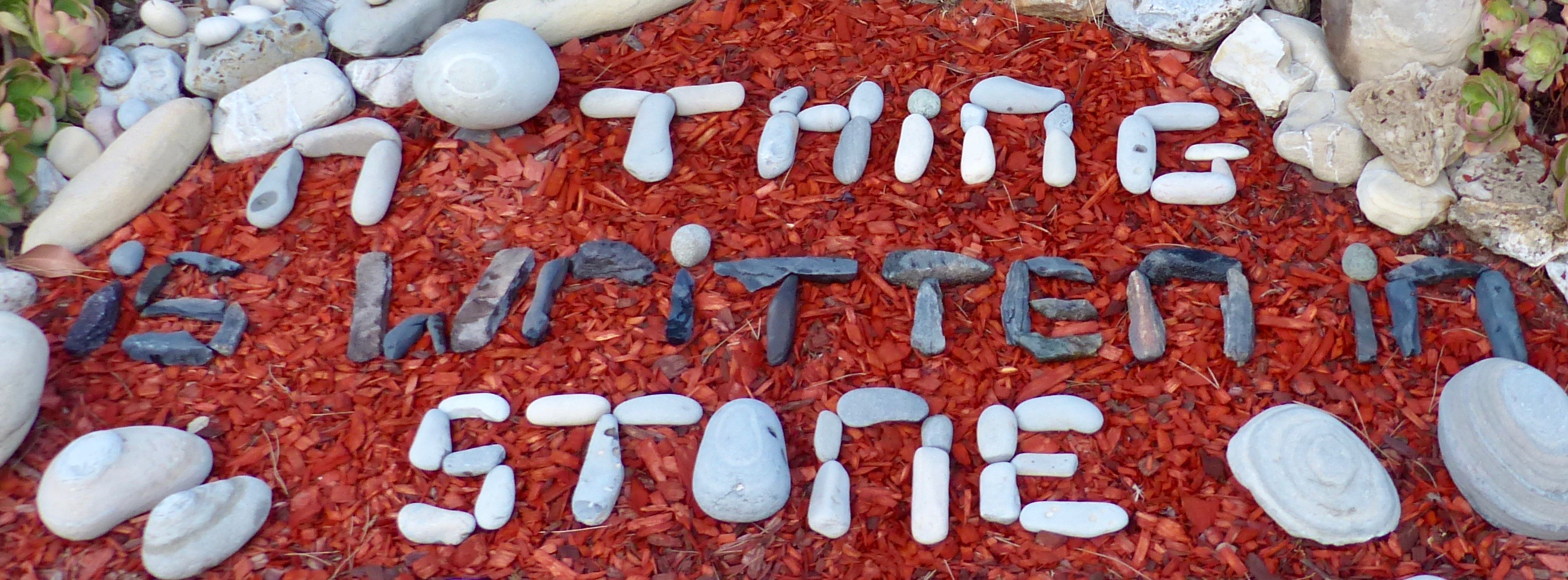
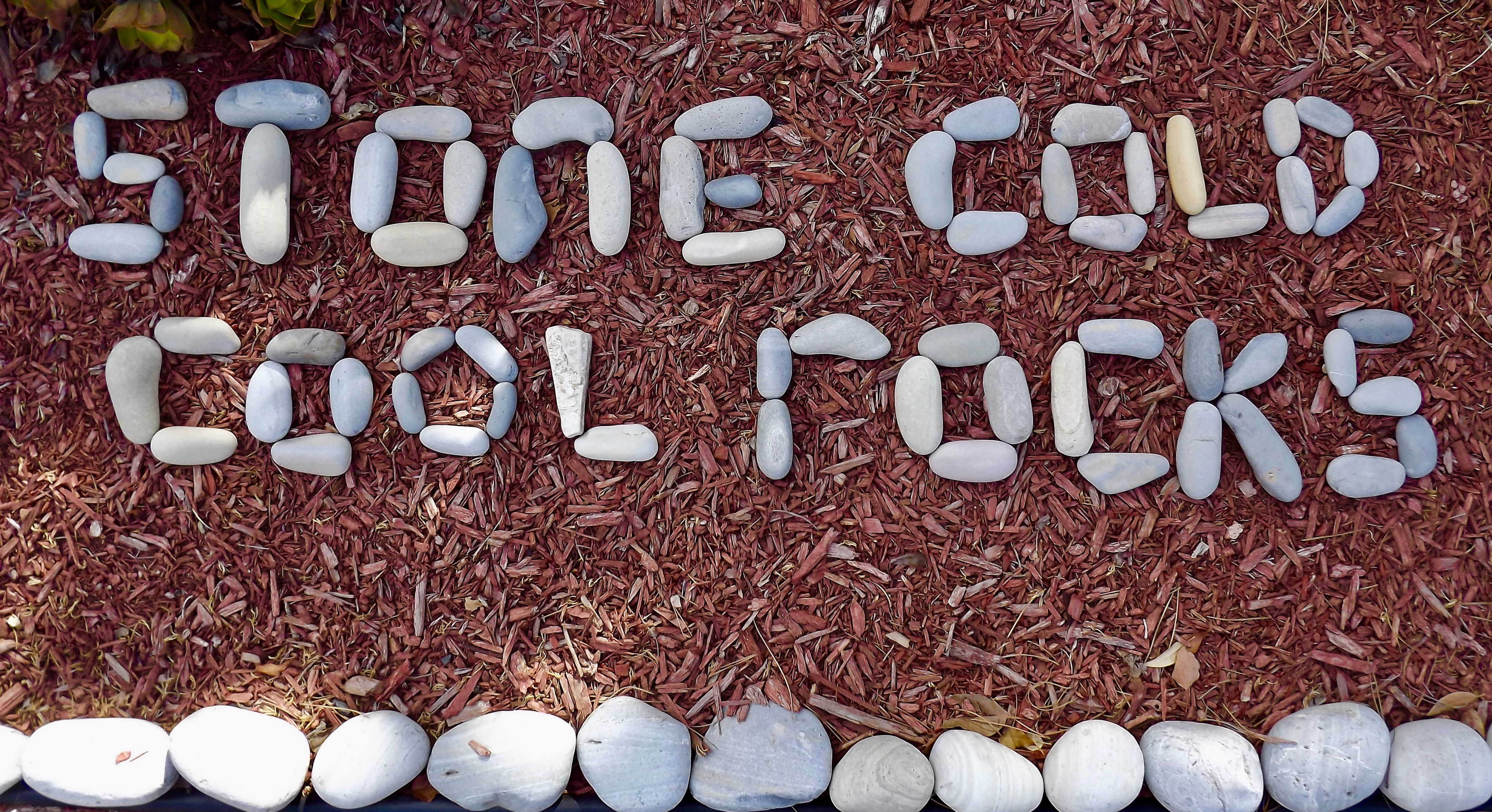
Deleuzian apprenticeship centers on studying a substance as "emitt[ing] signs to be deciphered, interpreted." Pierre Jardin extends this learning process to composing signs with stones. He siphons ciphers encrypted in stones, finding in rocks a font of information, or finding sets of similar rocks that form a functional font.
The principles of petric poetics are put into practice on the paths below.