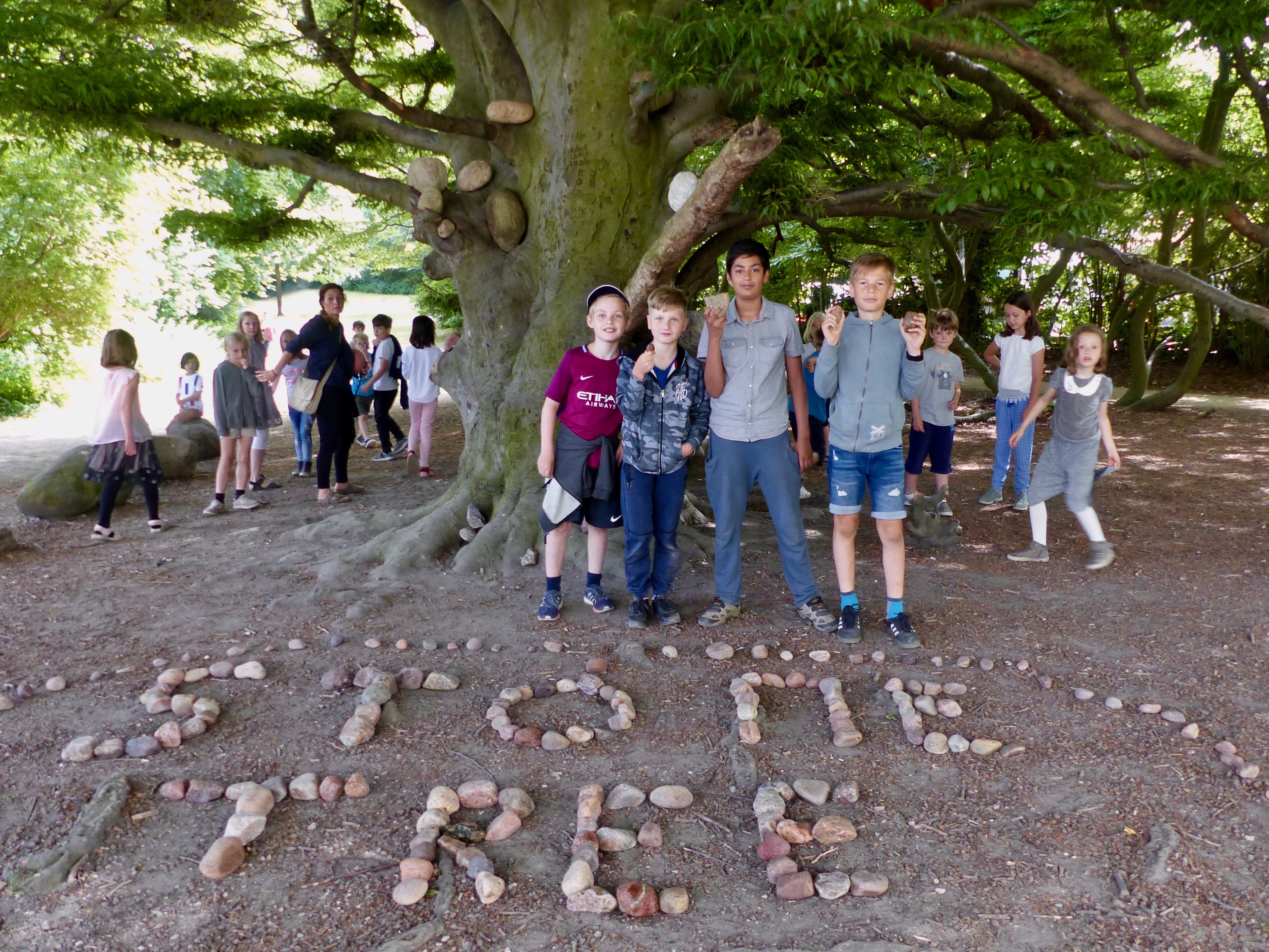
12018-09-08T22:51:56+00:00Paul A. Harris0462def817acd13db43634107b67e5f0f737f3f122Stoned Tree. Rocks collected in Denmark, installed at Statens Museum for Kunst June 2018plain2018-09-08T22:53:47+00:002018061303045320180613030453Paul A. Harris0462def817acd13db43634107b67e5f0f737f3f1
This page is referenced by:
12018-09-08T23:00:58+00:00Stoned Tree4plain2018-09-08T23:14:47+00:00Pierre Jardin was extremely grateful for the opportunity to create stone-tree installations in Østre Anlæg park for a Friday evening event in June 2018 at the Statens Museum for Kunst in Copenhagen. Here is the first work:
"Stoned Tree"
This beautiful tree has an ancient quality and an aura of hospitality. The circle of boulders around it demarcate a space under its canopy, a place of reassuring strength and peace, where children can play around its trunk. The niches in roots and branches offer shelter to stones, which are welcomed as ancestral visitors, and adorn the tree with aeonic matter and energy.
While I was working, four schoolboys on a treasure hunt assignment stopped and asked me what I was doing. I said, "I'm playing rocks. Would you like to join me?" They quickly formed the circle of rocks around the pebble letters, and I let them each choose a rock to take home. As they posed for this photo, one of them said, “Before, the tree was just a tree. Now, it is a magic tree!”
The rocks represent a great deal of Denmark’s complex geologic history. The granite, gneiss, basalt, and porphyry pebbles are 1 – 2 billion years old, and the sandstone was formed at least 600 millions ago, when this land was south of the equator. These are “Outside Art” stones: they were collected on the beach below The Louisiana Museum of Modern Art, renowned for being among the first museums to integrate art into the outdoors in its stunning sculpture park.
“Stoned Tree” opens a dialogue between the museums, as it poses the question, what is art? Do the rocks transform from nature into art, by virtue of being moved and recontextualized, becoming part of an assemblage in a park outside a museum? Or, should we consider these colorful cobbles to be works of earth-art, products of telluric powers and processes? Pour water on them and watch as they pop into a palette any painter would approve!