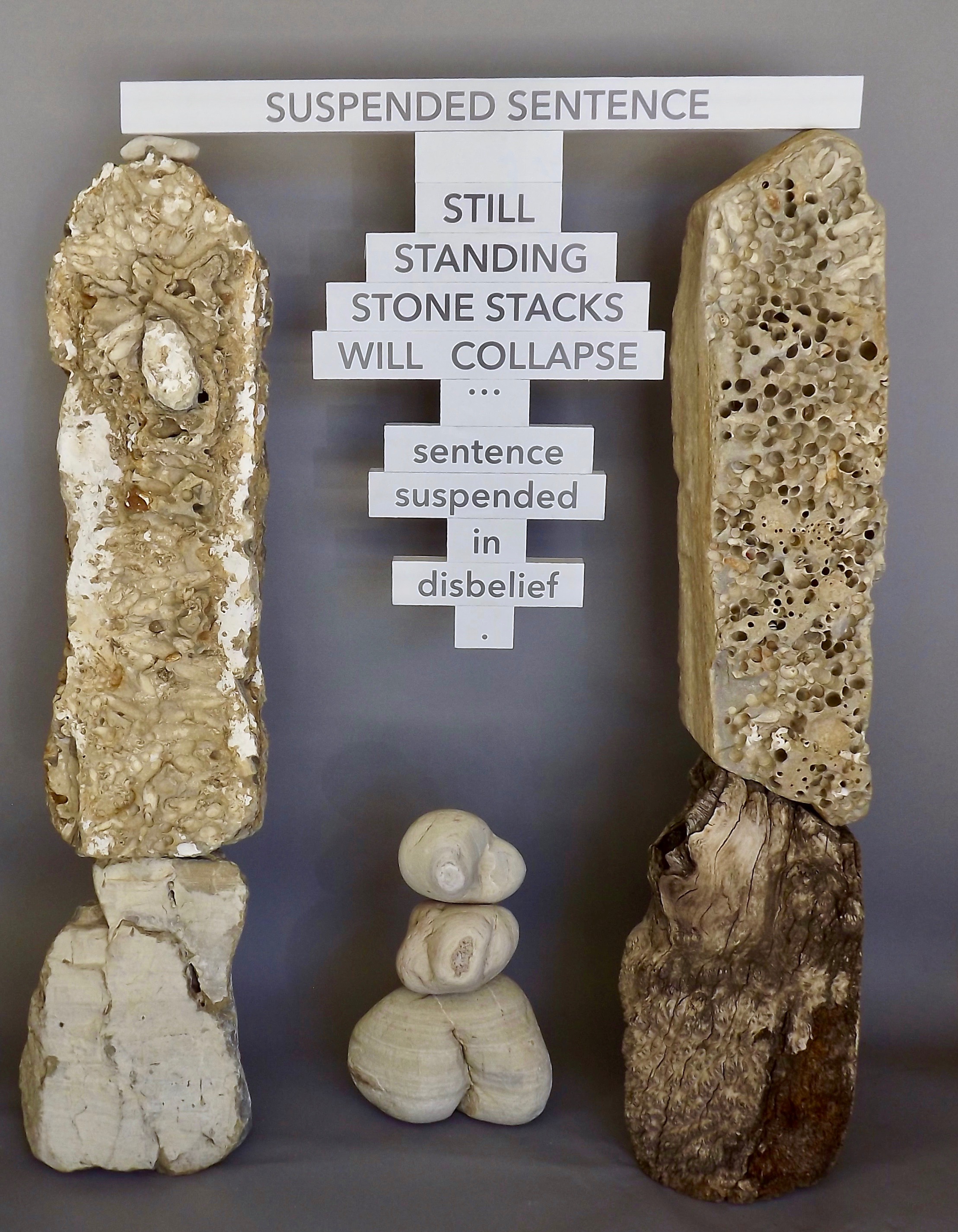
12018-08-14T00:51:23+00:00Paul A. Harris0462def817acd13db43634107b67e5f0f737f3f121Suspended Sentence, 2017. Styrofoam, shore stones, stump. 49"h x 36"wplain2018-08-14T00:51:23+00:00201609241401027c+JkYwLQ9eglwgnXdkbZw20160924140102Paul A. Harris0462def817acd13db43634107b67e5f0f737f3f1
This page is referenced by:
12018-08-14T00:53:28+00:00Ephemerality & Mortality2plain2018-08-14T00:54:59+00:00A delicately poised cairn stages a collision of disparate timescales, as the obdurate durability of stone contacts and contrasts with the ephemeral duration of the stone stack. As George Quasha observes, “a stone at the edge is still happening" (36). The human shaping of the stones into a balanced configuration can come to an end at any time; its mortality is certain but time of death unknown. Ephemeral stone stacks as an uncanny harbinger of death inverts the customary role of stone as a medium for monumental memorialization of mortality.
Mortal human life is lived as a suspended sentence: we know we are sentenced to die but we usually do not know when or how. Similarly, stone stacks stay standing in a state of sustained caesura. Persisting in a prolonged pause, they hover precariously between existing and ceasing to exist, between presence in space and absence in time. This composition pays homage to these qualities by suspending a sentence between and above the stacks serving suspended sentences. The word stack of the first lines may collapse through the ellipsis that suspends the sentence's progress; the sentence instead ends on the note of disbelief or denial. "Suspended in disbelief" of course echoes Samuel Taylor Coleridge's phrase "a willing suspension of disbelief," referring to the necessary choice by a reader of literature to 'suspend disbelief' in the world created on the page. The same double-think obtains with respect to our need to treat the reality that our life is haunted by a death sentence as a fiction.