The Way of Dao
5
plain
2019-01-13T22:09:27+00:00
non_branching_parent_page
The historical Chinese passion for stone is pervasive: it underlies cosmology and philosophy; it finds expression in the arts of creating gardens,
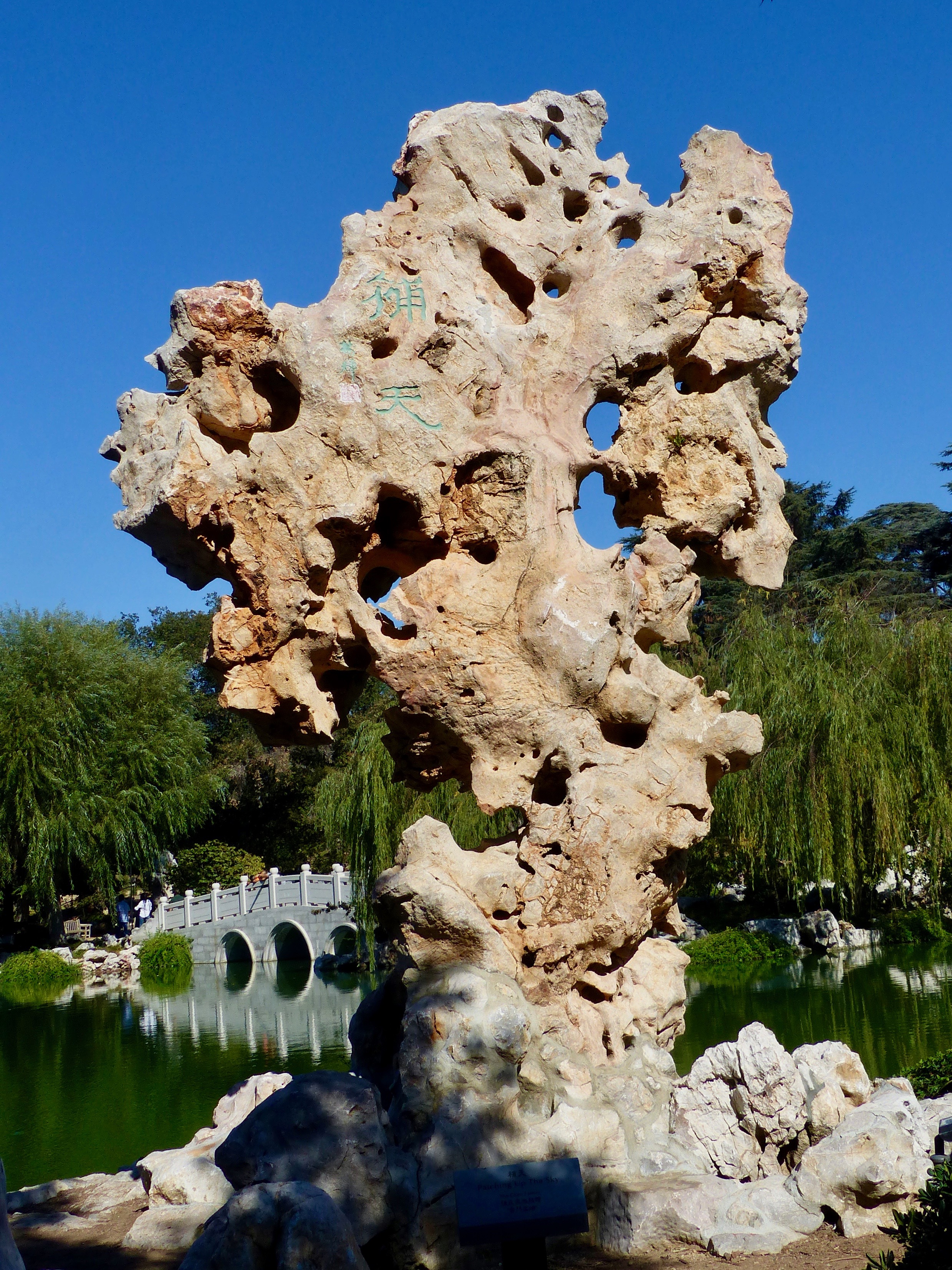
visual art, and poetry, as well as mounting and displaying stones on desks of officials and scholars. These systems and practices are often integrated rather than seen as separate domains. Of particular interest are ‘weird rocks’ or ‘strange stones.’ Large examples have been placed in emperors’ gardens since at least the 3rd century BCE, and smaller stones mounted on stands for private viewing. The most sought after and renowned examples of these rocks come from the Lake Tai area, near Suzhou, home to many famous classical gardens. As Parkes explains: “These rocks formed from limestone deposits nearly 300 million years old, which were corroded into extravagant shapes when the area was covered by sea, and were subsequently worked and sculpted by the action of hard pebbles on the bed of the lake during storms. Especially fine specimens of these Taihu rocks – which often look like frozen billows of sea spume, or enormous stone fungi burgeoning into the air, or extravagant coral formations poised in an invisible ocean – often stand alone as the centerpieces of famous gardens” (76).