Tidal Shelf
1 2018-08-12T20:50:34+00:00 Paul A. Harris 0462def817acd13db43634107b67e5f0f737f3f1 2 1 Tidal Shelf plain 2018-08-12T20:50:34+00:00 20170814 193137 20170814 193137 Paul A. Harris 0462def817acd13db43634107b67e5f0f737f3f1This page is referenced by:
-
1
2018-08-11T19:25:12+00:00
Micro-Cosmosis
17
plain
2018-09-08T18:19:09+00:00
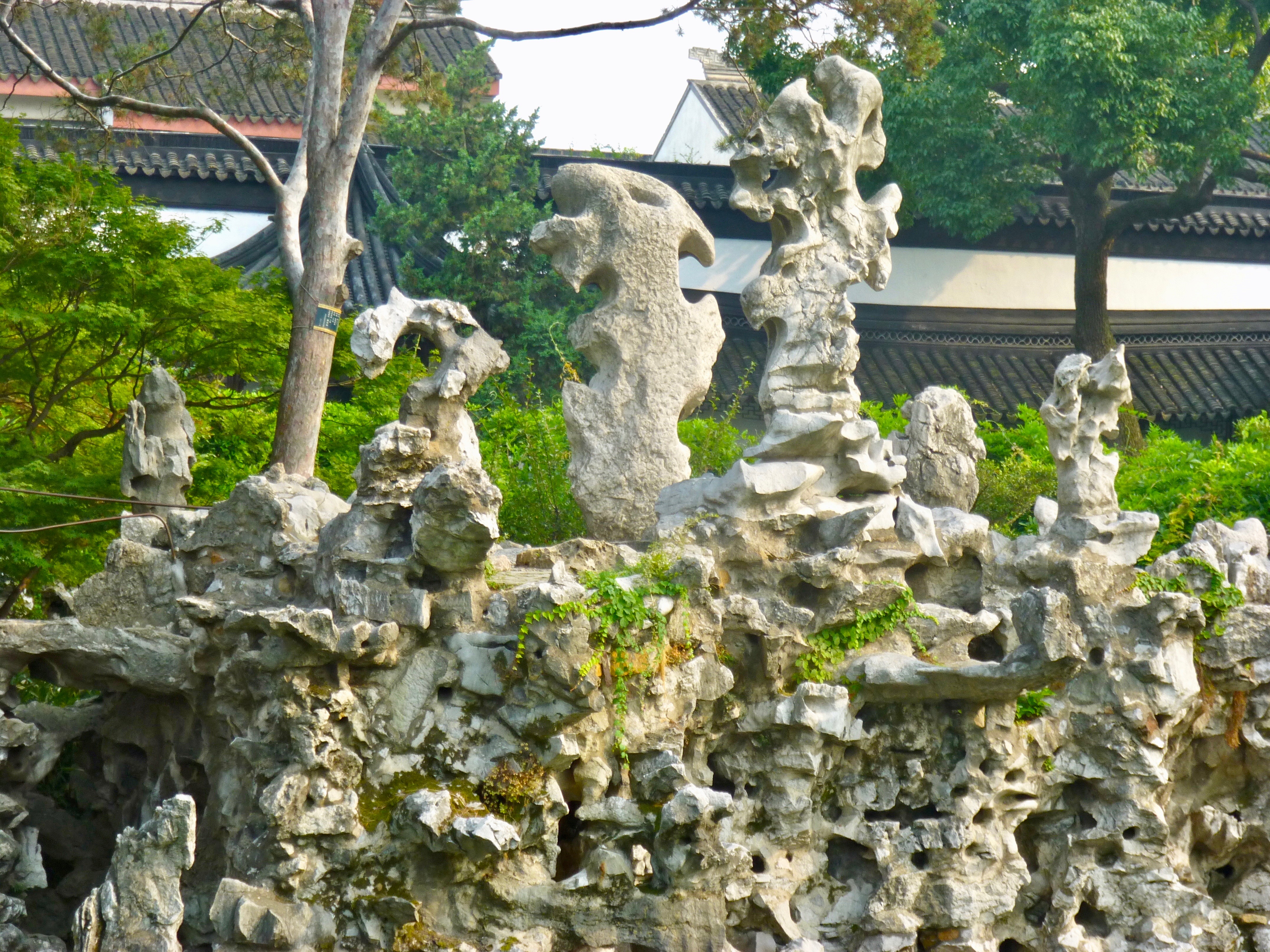
Rocks and gardens serve as microcosms for larger natural forces and formations. In classical Chinese gardens, taihu rocks, individually situated or piled into rockeries, were designed to evoke mountains. An oft-quoted passage from 18th century writer Shen Fu states that “in piling up rocks into mountains…the aim is to see the small in the large, and the large in the small, to see the real in the illusory and to see the illusory in the real.” The famous rockery at the Lion Forest Garden in Suzhou seen here features caves and tunnels under tall standing stones, simulating the vast caverns and striking peaks in renowned mountains like the Five Sacred Peaks.
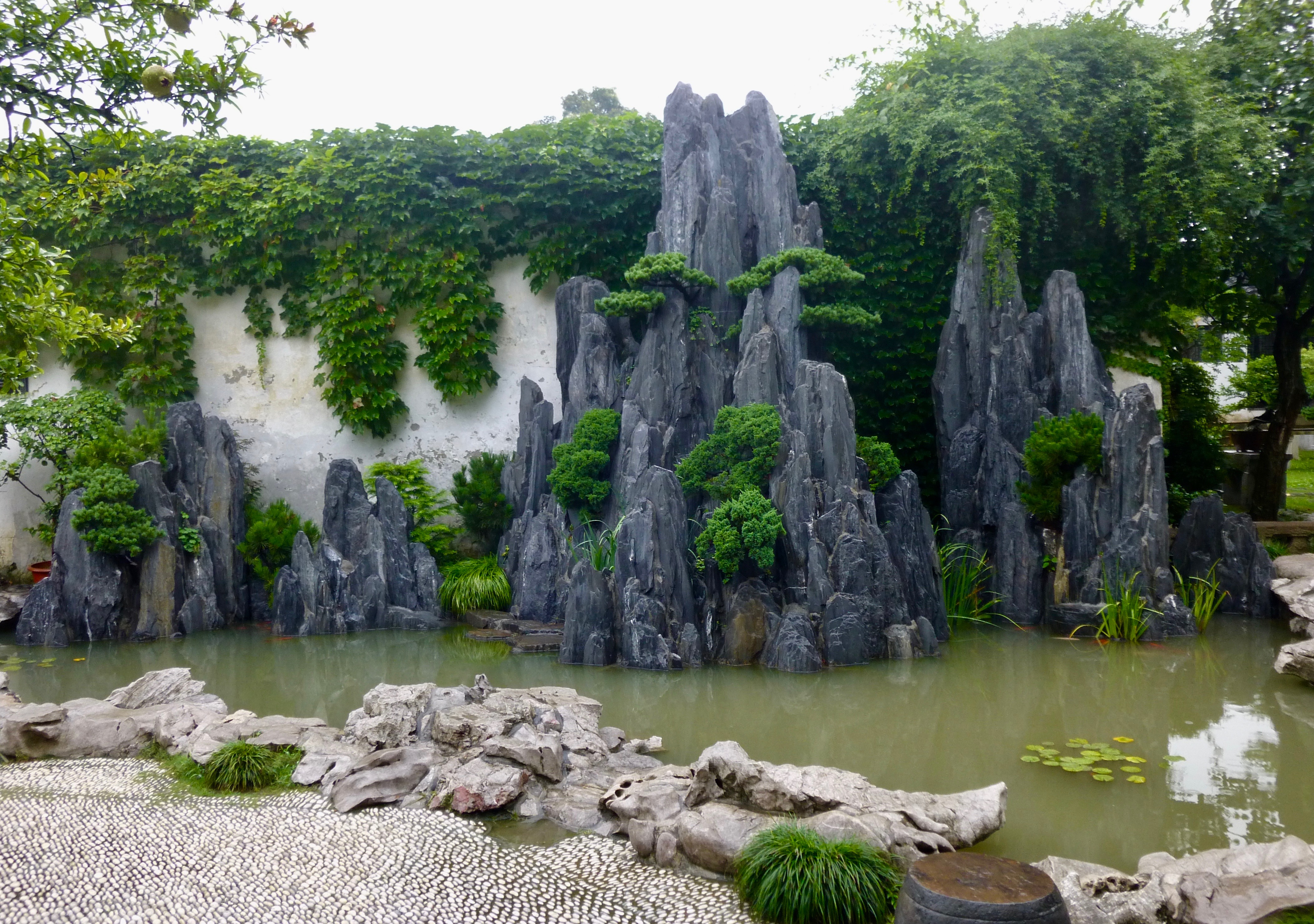
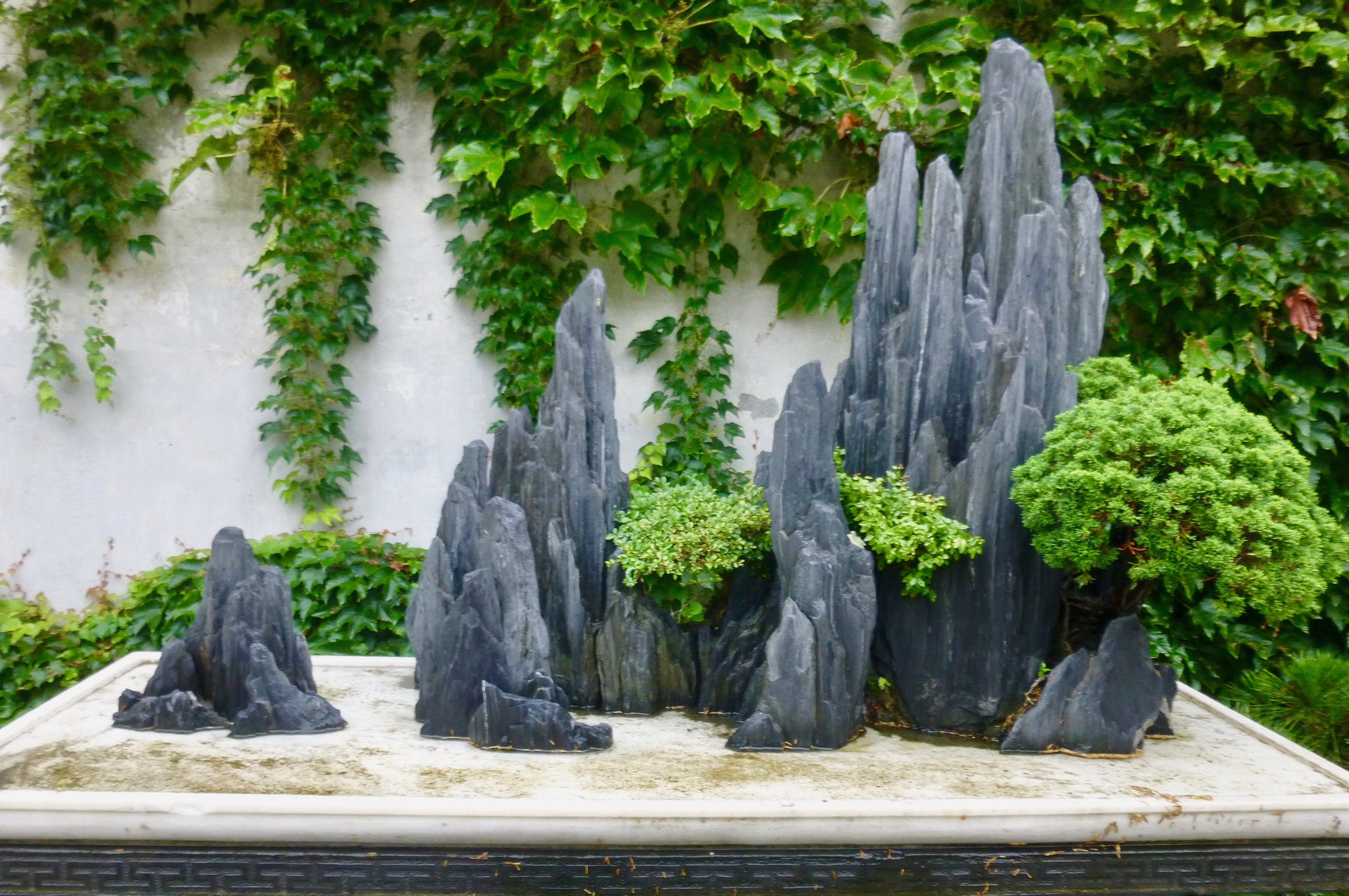
Pierre Jardin terms this scaling effect micro-cosmosis: a seed microcosm sprouting a cosmos, absorbing the viewer by osmosis into a landscape where the large appears in the small, the real in the illusory.
Penjing (Chinese, 'pot' and 'landscape') and its later adaptation Bonsai (Japanese, 'pot' or 'tray' and 'plant' or 'tree') exemplify this effect par excellence. Jardin coined the term to give a name to a striking experience in the Lingering Garden in Suzhou, when he saw self-similar landscapes at different scales in a side garden.
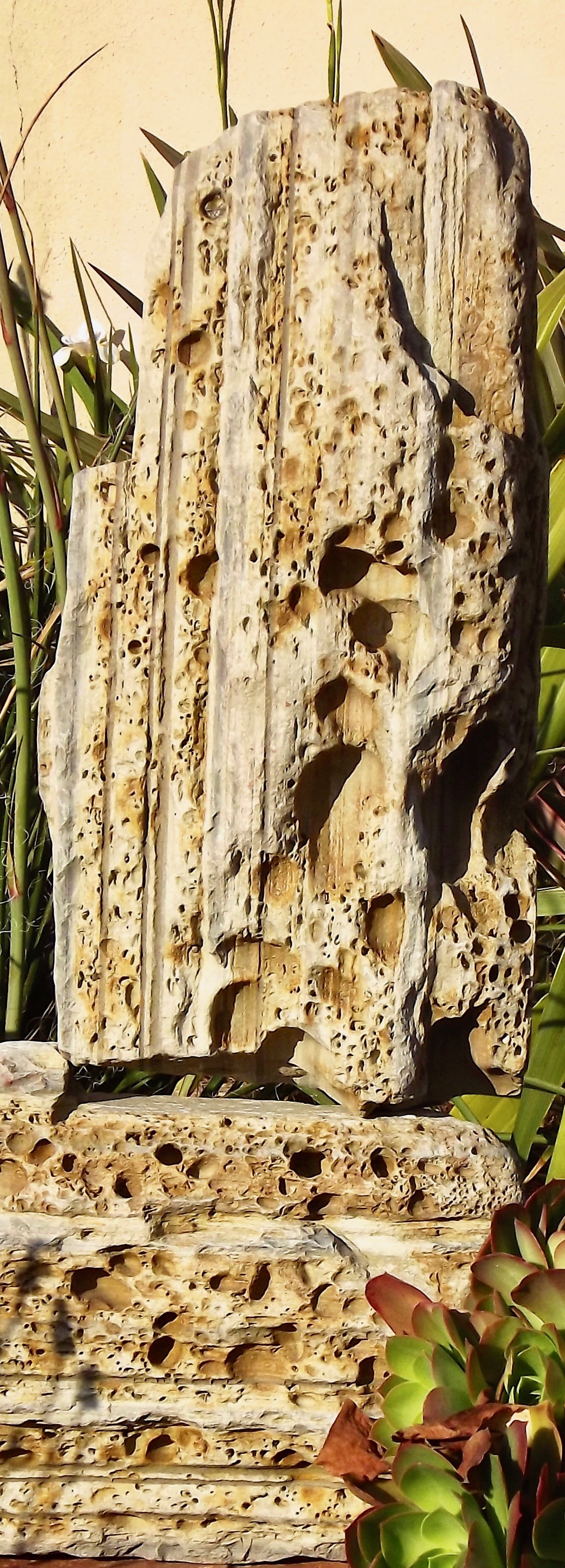
Despite his lack of skill in these subtle garden arts, Pierre Jardin attempts to evoke larger landscapes in small-scale assemblages, in an idiom suited to the geographical and geological context of his garden, coastal Southern California. This installation uses porous shore stones to stage a tidal shelf dotted with beachcombed rocks, seaweed, and coral meant to resemble birds, eggs, and small treasures one might find in tidal pools. A confusion of scale results from a jumble of juxtaposed elements: a dolphin skull dwarfs rocks standing in for coastal rock outcroppings, while small coral pieces in shells resemble trees in a larger landscape.
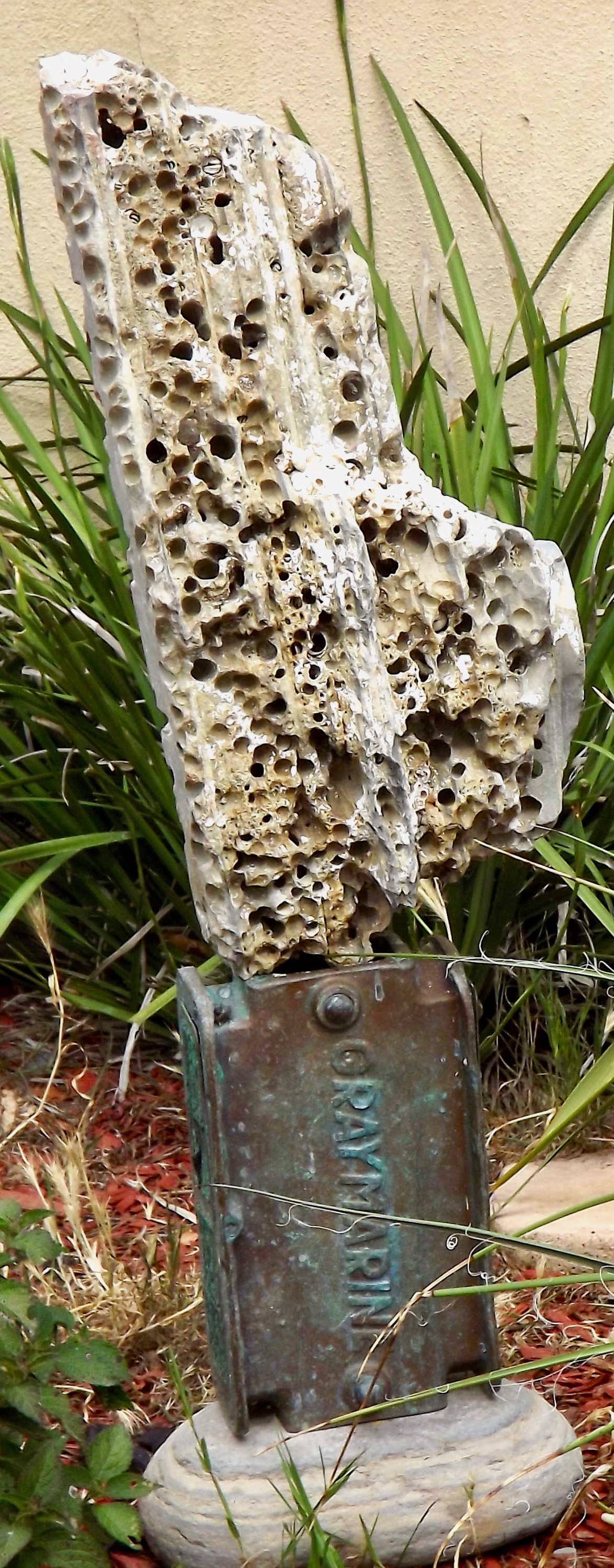
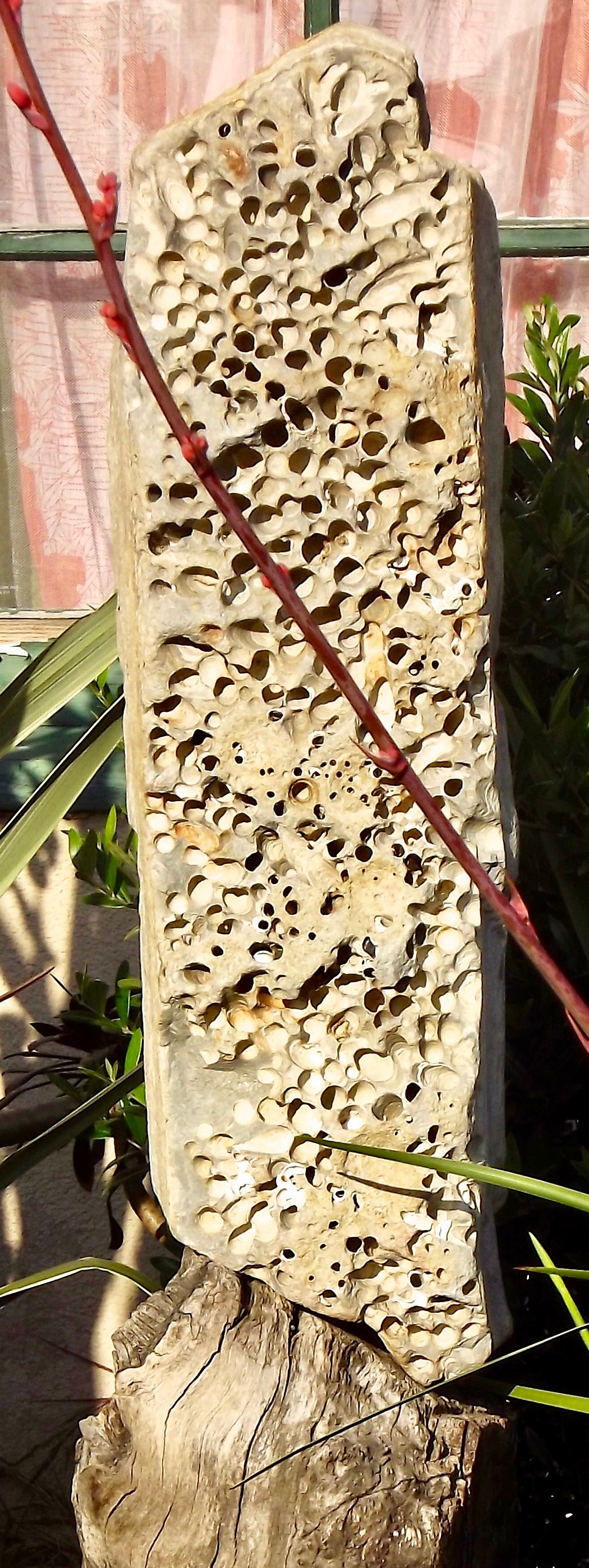
Behind the Tidal Shelf installation, three large, upright-balanced rocks loom. Pierre Jardin named them “The Holey Trinity” and imagines them as a set of tall coastal formations like one sees along beaches all around the world, from the Twelve Apostles in Australia to the Stone Henge pillars of Montaña de Oro State Park near San Luis Obispo.