Rock Fishing Video
1 2018-08-12T23:21:31+00:00 Paul A. Harris 0462def817acd13db43634107b67e5f0f737f3f1 2 1 plain 2018-08-12T23:21:31+00:00 Paul A. Harris 0462def817acd13db43634107b67e5f0f737f3f1This page is referenced by:
-
1
2018-07-16T20:24:26+00:00
Rock Fishing
26
plain
2019-01-12T23:19:35+00:00
This search for interesting stones became an enjoyable pastime in itself…. It deserves celebration and new appellation, ‘rock fishing.’ Combing the rivers and beaches for distinctively shaped and colored stones is a superior form of distraction, especially if one has a project in mind. --Charles Jencks, The Garden of Cosmic Speculation, 190.
Pebble-hunting is a pleasant and health-giving hobby…and all but those who are nearing the last stages of decrepitude can enjoy it. With understanding will come still greater enjoyment. To all who engage in this fascinating quest the author wishes good hunting, an insatiable curiosity and an ever-widening knowledge. --Clarence Ellis, The Pebbles on the Beach, 12.
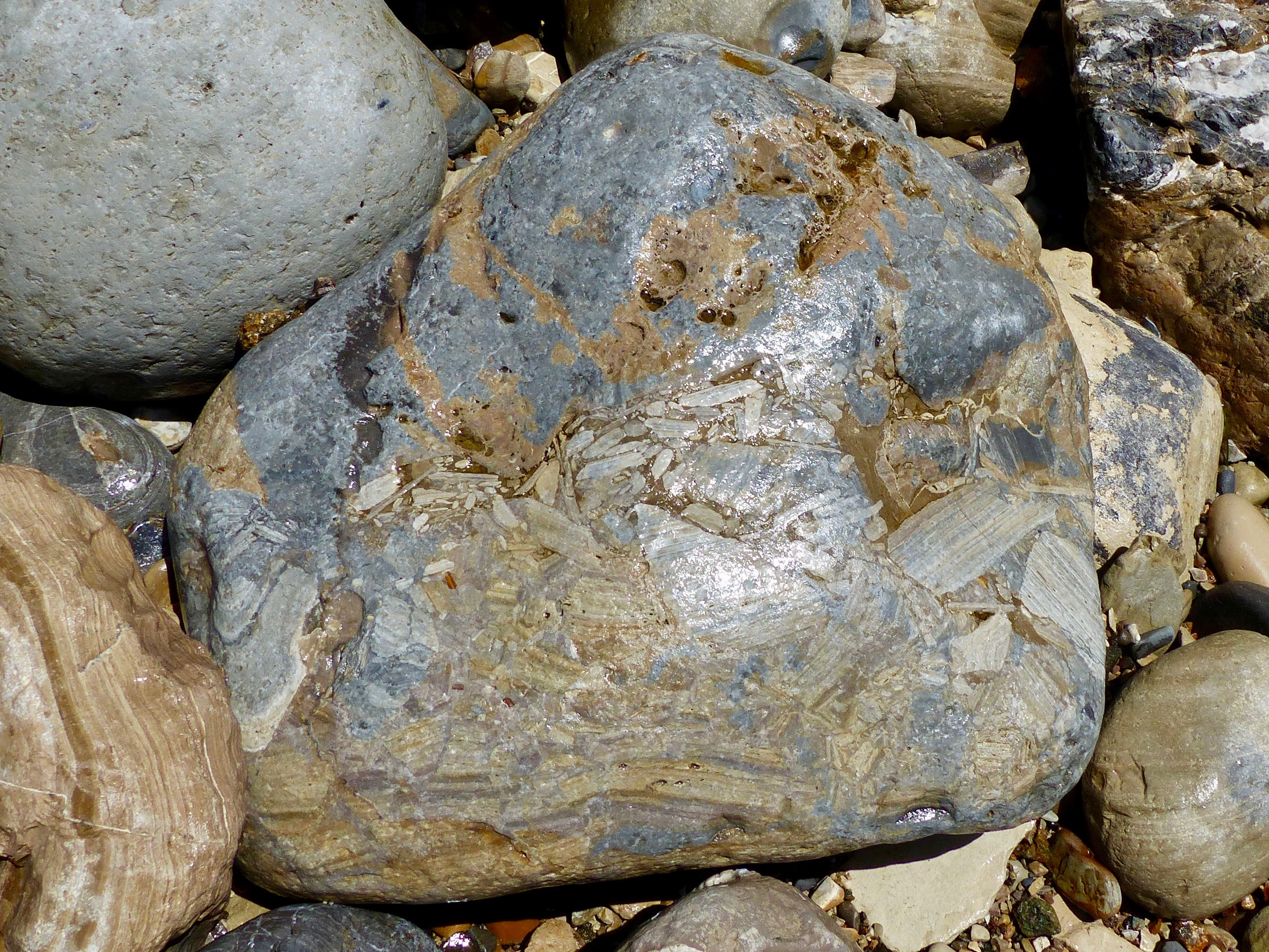
Pierre Jardin finds it difficult to pinpoint the precise inception of the Petriverse, but he can date the onset of his petromania to a day in the spring of 2000 he went to Abalone Cove on the Palos Verdes Peninsula south of Los Angeles. Stunned by the beauty and variety of rocks there, he spent hours in mesmerized scrutiny of their unusual colors, textures, mineral veins and foliations. In subsequent years, he would study the geology that yields distinctive local rocks such as San Onofre Breccia, a conglomerate made of pieces of blueschist and other metamorphic fragments, the product of a complex history of erosion and re-deposition of subducted-then-uplifted-then-eroded-then-recemented rock fragments.
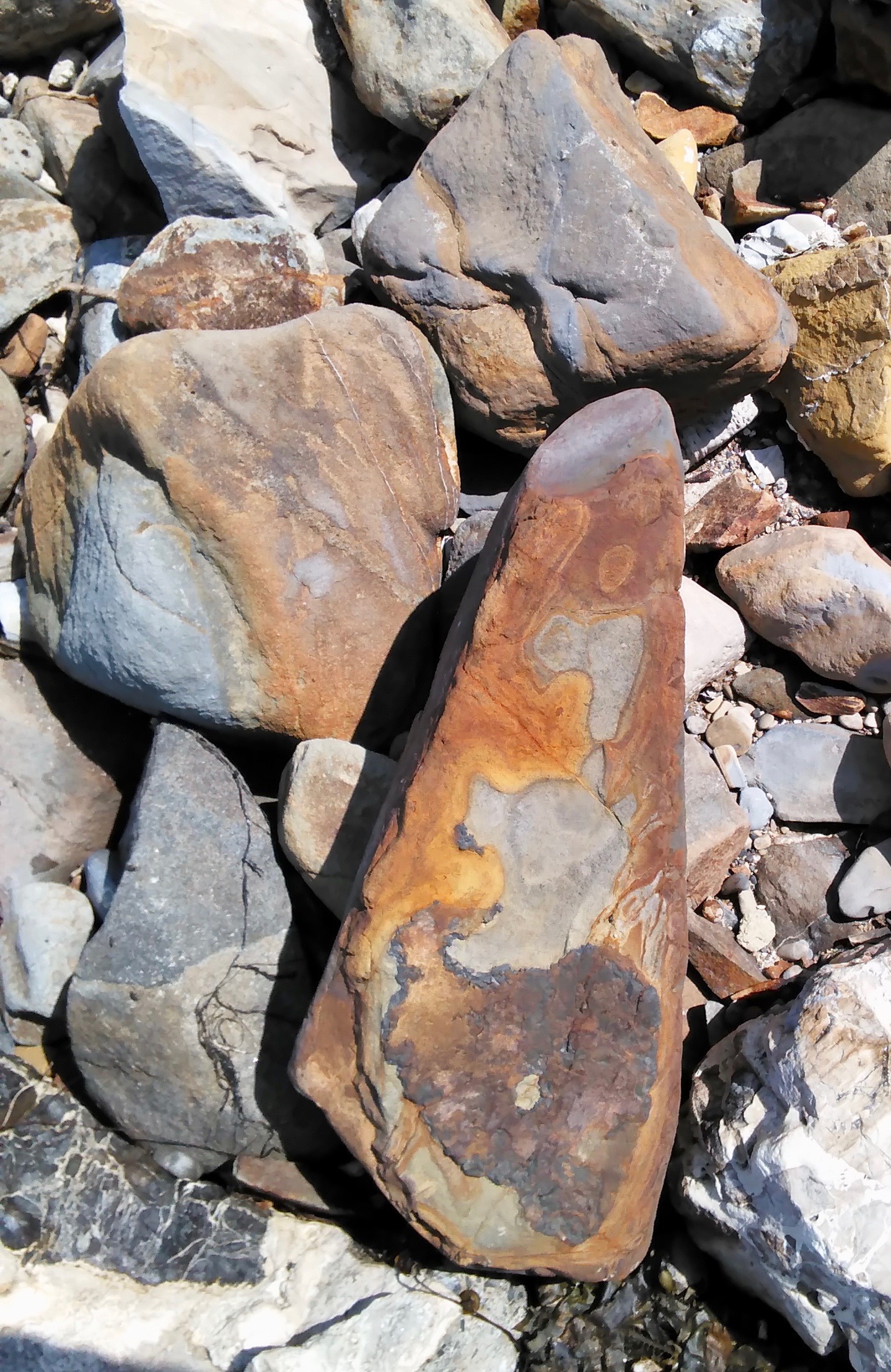
Ignoring the views of Catalina Island, forgetting to look for seals and dolphins swimming in the cove, he walked with his gaze glued on the cobble, occasionally stooping down to pick up a rock or cup a rounded pebble in his palm. Rock fishing is a slow time exercise, an immersive gaze that touches rocks with curious eyes, a meandering along in mute joy. Jardin sorted out a few stones that he found particularly appealing, took them home, and passed pleasant hours turning them in his hands, tracing singular lines and patterns with his eyes, and wondering what events had formed them.
Jardin also began to photograph rocks that he liked, but could not carry, perhaps as a compensation or alternative way to collect them. At some point in repeating the process, Pierre Jardin realized that he felt drawn to the stones, energetically as well as aesthetically; certain rocks (and not others) ended up in the backpack because there was some resonance with them, to the point that he felt as if the stones selected him as much as he chose the stones. Over the years, he has taken comfort in discovering that this strange sensation, of a stone actively attracting one’s attention, is common among petrophiles. Referencing a rock he found on a beach in Maine, Jeffrey Jerome Cohen asks, "But what if the stone seized me? What if the petric egg, so perfect for the palm, holds more than an accidental power to draw human hand and story? What if it is not anthropomorphizing to speak of a stone's ability to resist, its power to attract—and even of its sympathies, alliances, inclinations, and spurs?"
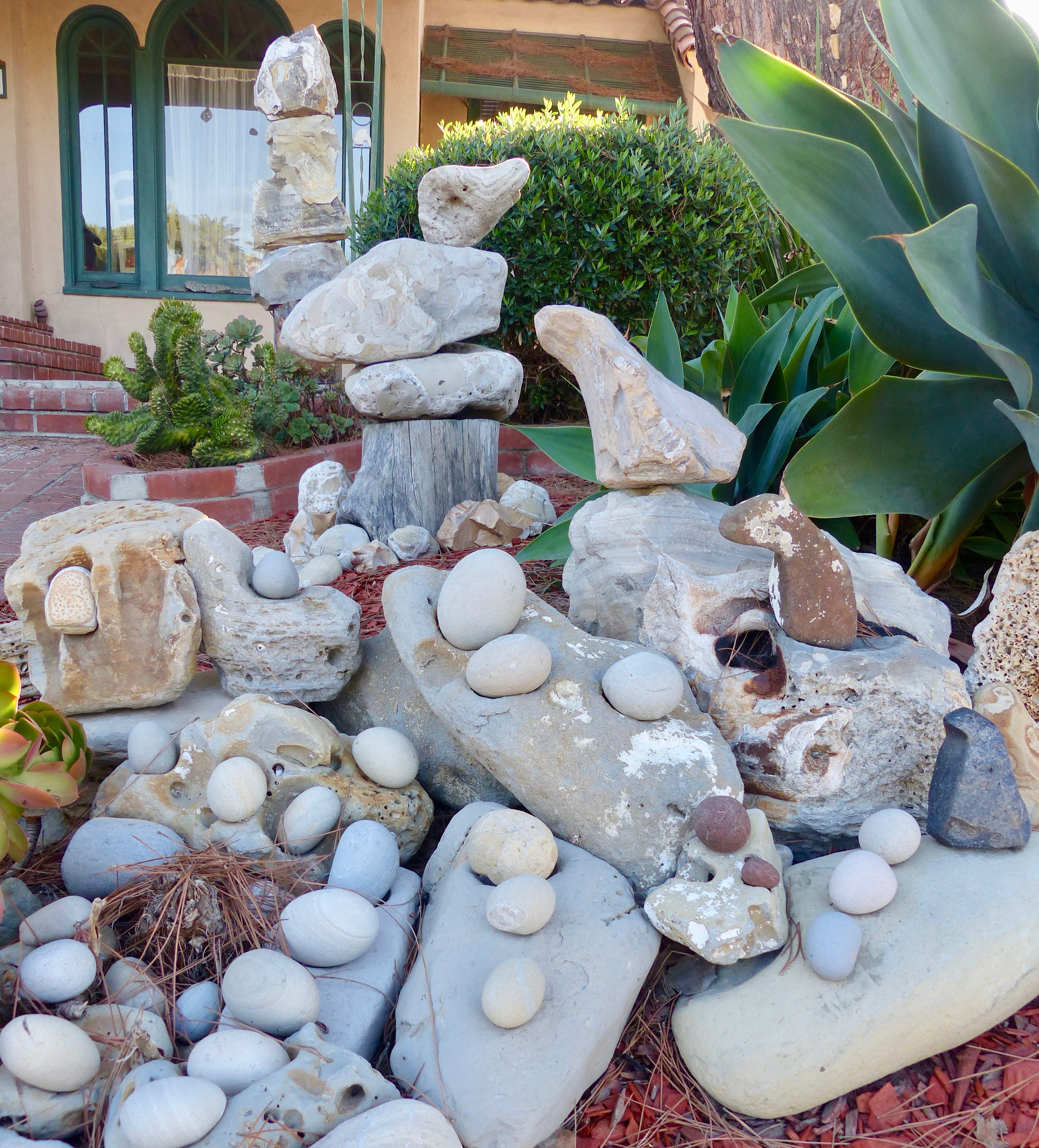
Over the years, The Petriverse has become something like an oblique repetition or relocation of a Palos Verdes shingle beach, bearing the memories and feelings of hours spent collecting rocks, imbricated in a suburban xeriscape. The more the garden incorporated the beach, however, the more Jardin began to question his desire to possess the rocks and the environmental ethics of his voracious collecting. He became discerning in the vein expressed by George Quahsa: “Sometimes I’m especially careful about the rightness of moving a stone, of taking it away from its native spot. It will become nomadic. A certain sensitivity to stone translates as responsibility for its further existence. And if the stone is powerful, it will affect the place it’s transported to” (Quahsa 48). His rock-fishing has become a kind of protracted catch and release practice; rocks he loves, even precious birdstones and lithic eggs, should be set free. By embracing a recycling process whereby some rocks are returned to the beach as others are brought back, Jardin quite unwittingly instigated a rock cycle in the already unstable local rock record.